
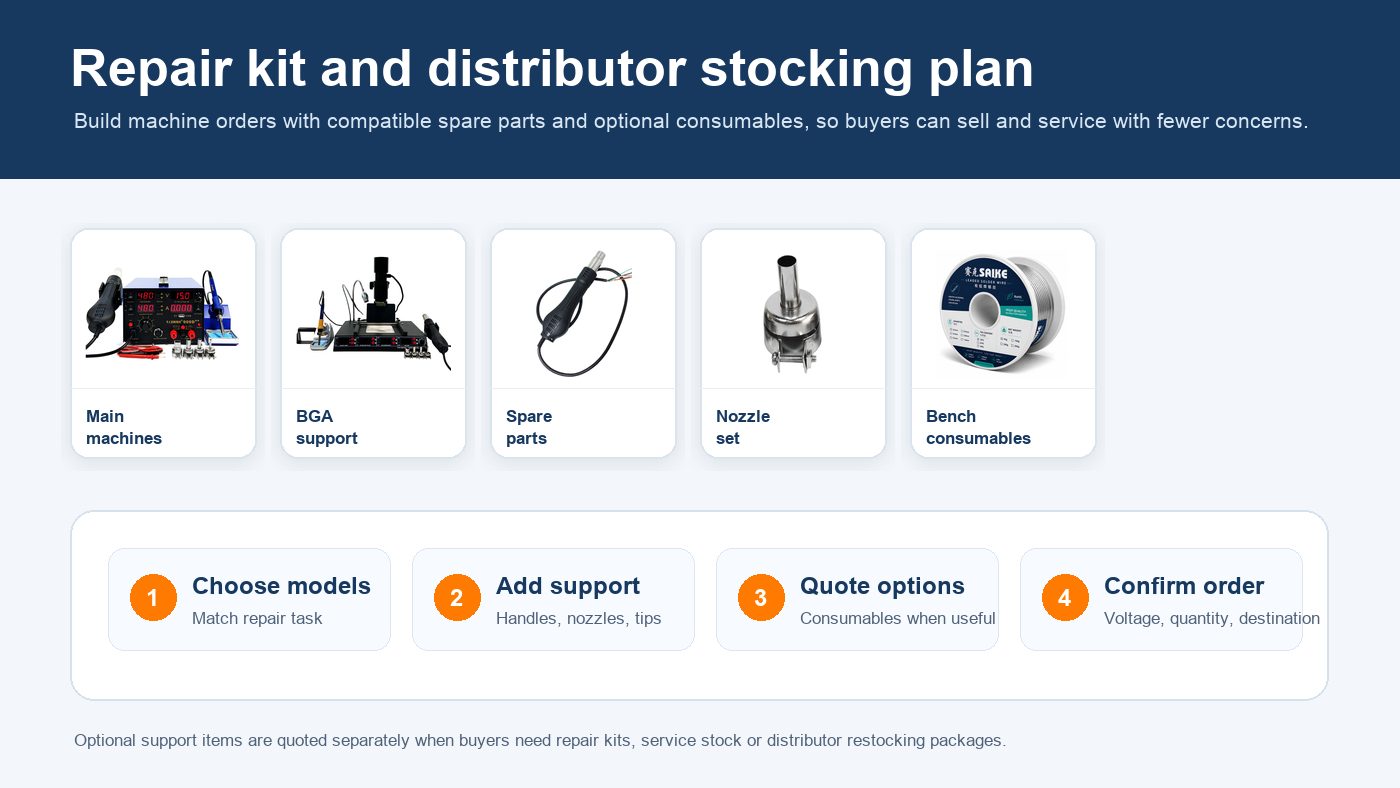
For repair shops and distributors, buying only the main machine is sometimes not enough. A buyer may also need spare handles, nozzles, soldering tips, heating cores or basic bench consumables so the equipment can be used, sold and serviced with fewer concerns.
This guide explains how to plan a SAIKE repair station order as a practical kit or distributor stocking package.
Quick Answer
A useful repair station kit should start with the repair task, then add compatible spare parts and optional consumables only when they help the buyer. Do not build a random accessory bundle. Confirm model, quantity, voltage, destination country and support needs before quotation.
Start From the Repair Work
The first step is to understand what the buyer repairs. Different buyers need different combinations:
| Repair work | Main machine direction | Support items to consider |
|---|---|---|
| Phone and PCB repair | Hot air rework station, 2 in 1 or 3 in 1 station | Hot air nozzles, handles, soldering tips and cleaning items |
| General electronics repair | 2 in 1 or 3 in 1 station | Soldering handle, tips, solder wire and solder wick |
| Wider bench testing | 3 in 1 station or DC power supply support | Test leads, compatible cables and basic bench accessories |
| Board-level heating work | BGA rework system or preheating support | Board support, heating platform and model-specific accessories |
| Distributor restocking | Priority models plus service parts | Handles, heating cores, nozzles and selected consumables |
See All Products if the buyer is still comparing product lines.
Choose the Main Machines First
The main machine decides which support items make sense. A hot-air-only model does not need soldering tips unless the buyer is also purchasing soldering equipment. A 3 in 1 model may need hot air support parts, soldering support parts and DC test leads.
Common directions:
- Hot Air Rework Station for focused hot air repair work.
- 2 in 1 Hot Air Soldering Station for hot air and soldering in one bench setup.
- 3 in 1 Hot Air Soldering Station when the buyer also needs DC power support.
- BGA Rework System for board-level heating and BGA repair work.
If the buyer is unsure, recommend models by repair work and order quantity instead of pushing every product at once.
Add Spare Parts for After-Sales Confidence
Spare parts help reduce buyer concern after the machine is sold or used for a long time. They are especially important for distributors and service businesses.
Useful spare parts may include:
- Hot air handle.
- Hot air heating core.
- Soldering iron handle.
- Soldering heating core.
- Hot air nozzles.
- Soldering tips.
- Test leads or connector cables when the model supports DC output.
These items must match the exact model series. Do not assume one handle, nozzle or tip fits all machines.
Add Consumables Only When They Fit the Order
Consumables should support the buyer's repair work, not become the main selling point. For soldering function models, solder wire, solder wick and cleaning sponge can be useful as optional add-on items.
Recommended handling:
- Offer solder wire for starter repair bench kits.
- Offer solder wick when the buyer handles PCB repair and desoldering.
- Offer cleaning sponge or brass wire for soldering tip maintenance.
- Keep liquid or paste flux separate because shipping and customs requirements may vary by destination.
For hot-air-only buyers, focus first on nozzles, handles and heating cores. Add soldering consumables only when the buyer also needs soldering tools.
Distributor Stocking Package Logic
A distributor stocking package should cover both sales and basic service needs. The goal is not to increase item count blindly. The goal is to help the distributor answer buyer questions and support common after-sales cases.
A practical stocking plan may include:
- Priority models for the local repair market.
- Compatible spare handles and heating cores.
- Common nozzle sizes or soldering tip series.
- Optional bench consumables for starter kits.
- Clear quotation notes that separate the machine order from add-on support items.
This approach helps the buyer understand what they are getting and what can be added when needed.
Machine Order and Add-On Support Items
Keep the machine package clear, then add compatible support items only when the buyer needs a repair kit, distributor restocking package or after-sales service stock.
Use this simple rule:
- Machine package: the machine and included items confirmed for the selected model.
- Replacement parts: service support for long-term use.
- Working accessories: items that help with specific repair tasks.
- Consumables: items used up during repair bench work.
- Repair kit: a quoted combination based on model, quantity and repair scenario.
See Repair Kits if the buyer wants machines and support items quoted together.
What to Confirm Before Quotation
Before preparing a repair kit or stocking plan, confirm:
- Buyer type: repair shop, distributor, training bench or service business.
- Repair work and target product line.
- Main machine models and quantities.
- Voltage, plug and destination country.
- Spare parts and accessory needs.
- Whether consumables are required.
- Any shipping restrictions for consumable items.
If you need help building a practical repair station kit, contact SAIKE with the model list, quantity and repair scenario. We can help match the main machines with suitable spare parts and optional support items for quotation.
Send your repair scenario, model requirement and quantity. We can help confirm suitable hot air rework stations, soldering tools, power supplies or repair kit options.
Contact SAIKE